

Okay, so I stumbled across something wild today that I just had to share. Forget everything you think you know about fighting sea-level rise. This isn’t about bigger walls or fancier dams. This is about… well, terraforming.
A company called Terranova, founded by someone who clearly watched too much sci-fi (in the best way possible!), is working on a way to literally raise cities to combat flooding. I know, it sounds like something out of a movie, right?
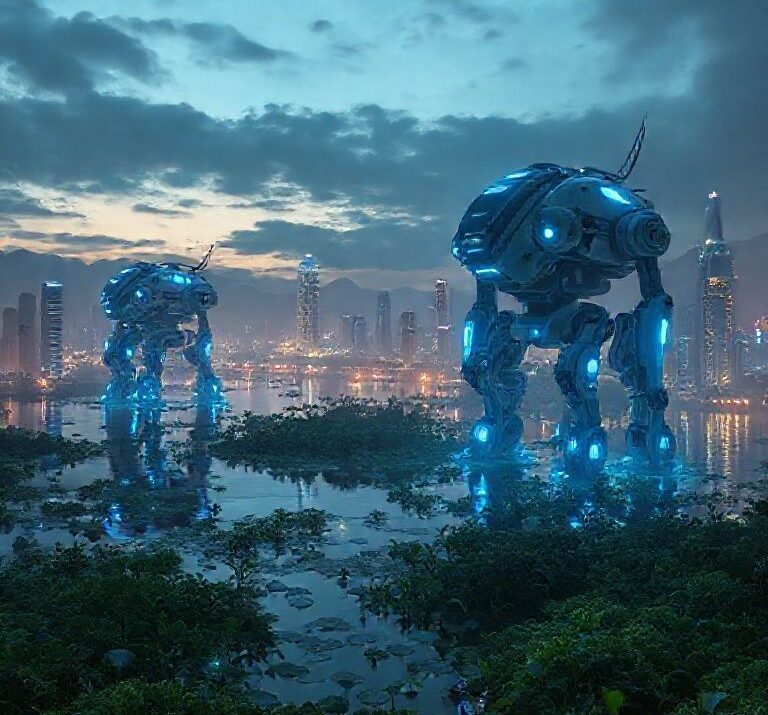
Instead of trying to hold back the ocean with traditional methods, Terranova envisions using swarms of autonomous robots to strategically deposit sediment and build up the ground beneath existing cities. The TechCrunch article I saw focused on San Rafael, California, but the implications are massive, especially for places like Douala, Cameroon, where flooding is a real and increasing threat.
We all know climate change is making sea levels rise. The Intergovernmental Panel on Climate Change (IPCC) projects that global mean sea level could rise between 0.43 meters (1.4 feet) to 0.84 meters (2.8 feet) by 2100 under intermediate greenhouse gas emission scenarios. And let’s be honest, a couple of feet of water can wreak havoc, especially in coastal communities.
Traditional solutions like seawalls have their downsides. They can be incredibly expensive, disrupt ecosystems, and sometimes even exacerbate flooding in other areas. Plus, they’re kind of…ugly.
Terranova’s approach, if successful, could offer a more sustainable and adaptable solution. Imagine: instead of a concrete barrier separating us from the water, we have gently sloping, naturally reinforced land, raised gradually and strategically by these little robot armies.
Of course, there are huge challenges. The scale of the undertaking is immense, the technology is still in development, and the environmental impact of moving that much sediment needs to be carefully considered. But the potential payoff – saving coastal cities and communities – is enormous.
Here’s what I’m taking away from this:
- Thinking Outside the Box: This is a radical departure from conventional flood control strategies. It’s a reminder that sometimes the best solutions come from completely rethinking the problem.
- Tech for Good: Seeing technology used in such a direct and potentially impactful way is inspiring. We need more of this!
- Adaptation is Key: Even if we drastically reduce emissions tomorrow, we’re still going to have to deal with the effects of climate change. Innovative adaptation strategies like this are crucial.
- Environmental Considerations are Paramount: Any large-scale terraforming project needs to be rigorously assessed for its impact on ecosystems and local environments.
- Hope for the Future: Despite the grim headlines about climate change, there are brilliant people working on solutions. This gives me hope that we can find a way to adapt and thrive in a changing world.
What do you think? Could terraforming robots be the answer to saving our coastal cities? Let me know your thoughts in the comments!
Frequently Asked Questions (FAQs):
- What exactly is Terranova proposing? Terranova wants to use robots to add soil and sediments to raise the ground levels of cities to protect them from rising sea levels.
- Where did you hear about Terranova’s idea? I read an article about it on TechCrunch.
- Is this technology already in use? No, this technology is still under development. It’s not currently being used to raise cities.
- Is it safe to use robots to build land? While the idea can be good, building using robots will have to be reviewed by environmental experts to ensure we are not putting communities at risk.
- What is sea level rise? Sea level rise is the increase in the average height of the ocean over time, mostly caused by climate change.
- Why are cities worried about sea level rise? Sea level rise threatens cities by causing more flooding, erosion, and damage to infrastructure.
- What are some other ways to protect cities from flooding? Other ways include building seawalls, dikes, improving drainage systems, and restoring natural habitats like mangroves.
- Is Terranova’s idea expensive? The article does not share data on the expenses.
- Are there places in Cameroon that are affected by sea level rise? Yes, coastal areas in Cameroon, especially around Douala, are vulnerable to flooding and sea level rise.
- Can this idea be used in my town in Cameroon? If your town faces coastal flooding or is at risk from rising sea levels, this type of approach could be considered, but it would need a lot of planning and expert advice.